

Define the performance you need to retain
A well-protected magnet in stable conditions can retain useful magnetism for years or decades; it does not consume its magnetism simply by attracting steel. Slow magnetic aging can still occur. Dura's storage guidance uses a years-to-decades timescale for small changes in a well-designed, otherwise unstressed magnet, with the alloy and conditions determining the result.[4] This is a useful starting expectation, not a fixed expiry date or a warranty for an NdFeB part.
A useful lifespan statement needs an operating condition and an end point. Slow magnetic aging, a corroded or cracked part, and an assembly that no longer meets its required force or flux are different limits. A magnet can look intact while the system output has changed; visible damage can also make a part unacceptable before its magnetic material has aged substantially.[1] [4] [5]
| Limit | What to assess | Information to retain |
|---|---|---|
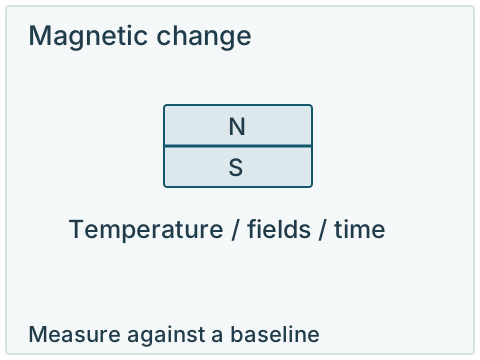
| Magnetic change | Change in the agreed magnetic measurement under controlled conditions. | Baseline, temperature, circuit, opposing fields and exposure history. |
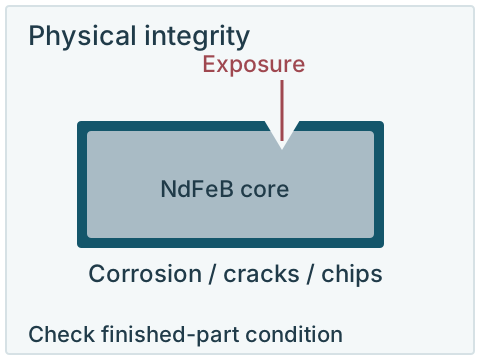
| Physical integrity | Corrosion, coating loss, cracks, chips or damage to retention. | Environment, handling, inspection method and acceptance criteria. |
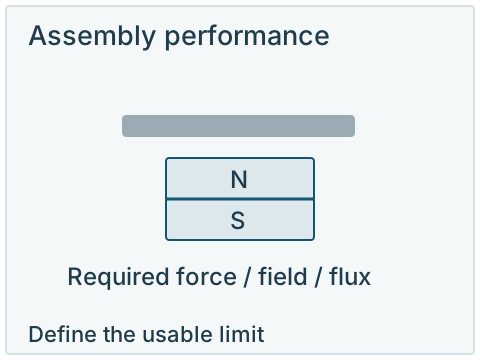
| Assembly performance | Whether the required holding force, field, flux or other function is still achieved. | The same measurement setup, geometry, gap and pass/fail limit. |
Three ways useful life can be limited
Magnetic change
- What to assess
- Change in the agreed magnetic measurement under controlled conditions.
- Information to retain
- Baseline, temperature, circuit, opposing fields and exposure history.
Physical integrity
- What to assess
- Corrosion, coating loss, cracks, chips or damage to retention.
- Information to retain
- Environment, handling, inspection method and acceptance criteria.
Assembly performance
- What to assess
- Whether the required holding force, field, flux or other function is still achieved.
- Information to retain
- The same measurement setup, geometry, gap and pass/fail limit.
Heating and opposing fields can cause losses that do not recover after cooling or removing the field. Corrosion and impacts create other failure paths. Neither “permanent magnet” nor a general years-to-decades statement establishes a warranty for a specific component. See temperature-related losses and corrosion protection for those mechanisms.
Use a comparable baseline
Keep the fixture, air gap and measurement temperature consistent. A changed assembly can alter force or field independently of magnetic aging.
Open larger diagramRead long-term studies with their test conditions
The Tampere doctoral research examined time-dependent polarization losses in sintered NdFeB over test durations from 1 to 10,000 hours. Its analysis connects long-term behaviour with temperature, permeance coefficient, coercivity and the shape of the demagnetization curve. It also uses a model to extrapolate behaviour to 30 years. That extrapolation is different from measuring a magnet continuously for 30 years.[1]
Related long-term research emphasizes curve shape and magnetic-circuit conditions.[2] A separate 1988 study also examined elevated-temperature changes as functions of time, temperature and permeance. Those tests illustrate why lifetime evidence needs its material and conditions retained.[3]
Questions to ask about a lifetime claim
Which grade and sample geometry were tested? At what temperature and circuit condition? What quantity was measured, for how long, and against which limit? Does the claimed duration come from direct observation, accelerated testing or extrapolation? Keep those distinctions with the result.
These studies explain why a universal loss percentage per year or decade is not a reliable specification. For an application, define the allowed change and obtain evidence relevant to its material, geometry and exposure history.
Record storage and handling requirements
| Situation | First question | Useful action |
|---|---|---|
| Dry, protected storage | Has the identified part remained free of moisture, heat and finish damage? | Keep its packaging and identification; inspect its condition before installation rather than replacing it solely because a calendar date passed. |
| Repeated hot operation | Is the change only present while hot, or does it remain after cooling? | Compare measurements at the same reference temperature and fixture; retain the actual magnet temperature and thermal duty for evaluation. |
| Moisture or coating damage | Are rust, chips or retention damage reducing the usable part? | Assess physical condition against the assembly requirements; a still-attractive magnet can nevertheless be unfit for use. |
Three situations call for different checks
Dry, protected storage
- First question
- Has the identified part remained free of moisture, heat and finish damage?
- Useful action
- Keep its packaging and identification; inspect its condition before installation rather than replacing it solely because a calendar date passed.
Repeated hot operation
- First question
- Is the change only present while hot, or does it remain after cooling?
- Useful action
- Compare measurements at the same reference temperature and fixture; retain the actual magnet temperature and thermal duty for evaluation.
Moisture or coating damage
- First question
- Are rust, chips or retention damage reducing the usable part?
- Useful action
- Assess physical condition against the assembly requirements; a still-attractive magnet can nevertheless be unfit for use.
Keep the protective finish intact, protect the parts from corrosion exposure, and use separation and packaging suitable for the magnetic forces involved. Avoid uncontrolled impacts and exposure to heat or opposing fields outside the agreed conditions. Follow the supplier's handling and storage requirements for the actual product.[4]
- For stored parts
- Retain identification and packaging information. Check for moisture ingress, finish damage and changed storage conditions before use.
- For rectangular or block magnets
- Pay attention to corners, edges and contacting faces. Prevent blocks from snapping together or being forced into a misfit; record any chipped edge or cracked body for assessment.
- For an operating assembly
- Keep the baseline and later checks comparable. Changed steel, air gaps, fixtures or measurement temperature can alter a force or field result independently of aging.
A magnet does not have a universal cleaning, retesting or replacement interval. Set those requirements from the application, supplier guidance and consequences of a performance change. Do not assume that a visibly corroded or cracked part is restored by cleaning it.
The handling and storage guide covers practical precautions; the block magnet guide helps define the component. Use consistent holding-performance test conditions and discuss required inspection records through the supply and quality checklist.
Technical sources
Read each source with its stated material, test conditions and publication scope.
- Studies on the Time-Dependent Demagnetization of Sintered NdFeB Permanent MagnetsMeasured test durations and model extrapolation are separate evidence.
- Magnetic Behavior of Sintered NdFeB Magnets on a Long-Term TimescaleRelated abstract from the same research programme as the thesis.
- Elevated Temperature Behavior of Sintered Nd-Fe-B Type Magnets1988 study abstract; historical test context.
- How Long Do Magnets Last and What is the Magnet Lifespan on a Shelf?Supplier educational guidance on storage and shelf life.
- How Long Do Neodymium Magnets Last? Lifespan GuideSupplier guide to lifespan definitions and operating conditions.